Thomas More
Utopia
Utopia
Couldn't load pickup availability
What would a perfect society look like? Thomas More's Utopia (1516) imagines an ideal island nation where property is communal, education is universal, war is rare, and citizens live free from fear, oppression, and suffering. Through dialogue between the traveler Raphael Hythloday and More himself, the work describes Utopia's rational social organization: six-hour workdays, elected officials, religious tolerance, and shared wealth. But Utopia is not simple fantasy—it's also scathing satire of 16th-century Europe, where enclosure laws dispossess peasants, the wealthy hoard resources, and war devastates nations. More's genius lies in the ambiguity: Is Utopia a blueprint for reform or an impossible dream? A serious proposal or ironic critique? The answer remains unsettled.
The work unfolds in two books. Book I critiques contemporary England—its unjust laws, economic inequality, and pointless wars. Hythloday argues that private property creates greed and suffering, that harsh punishments don't prevent crime, and that European society is fundamentally corrupt. Book II describes Utopia itself: a society organized around reason and the common good, where gold is despised, slavery exists for criminals, and euthanasia is permitted. Citizens work, study, and enjoy leisure together. There is no poverty because there is no private property. Yet Utopia is not paradise—it's regimented, conformist, and built on slavery. More leaves us to wonder: Is this vision liberating or oppressive? Does eliminating private property create justice or tyranny?
For contemplative readers, Utopia offers profound meditation on justice, community, and the gap between ideals and reality. The work asks: What does a just society require? Can we eliminate poverty and inequality without sacrificing freedom? What is the relationship between private property and human flourishing? How do we discern between necessary social organization and oppressive control? Utopia becomes a mirror for examining our own assumptions about justice, wealth, and the good life. More's ambiguity invites contemplative discernment—not accepting Utopia uncritically but using it to question our own society's values and structures. The contemplative challenge is to hold both the vision of what could be and the recognition of what is, using ideals to critique reality while remaining grounded in human nature and practical constraints.
What You'll Discover
- Thomas More's vision of an ideal island nation (1516)
- Book I: Scathing critique of 16th-century England's injustice, inequality, and war
- Book II: Description of Utopia's communal property, universal education, and rational organization
- Dialogue between Raphael Hythloday (the traveler) and Thomas More (the character)
- Ambiguity: Is Utopia a serious proposal, satire, or impossible dream?
- Contemplative insights into justice, community, and the gap between ideals and reality
- Foundational text of utopian literature and Renaissance political thought
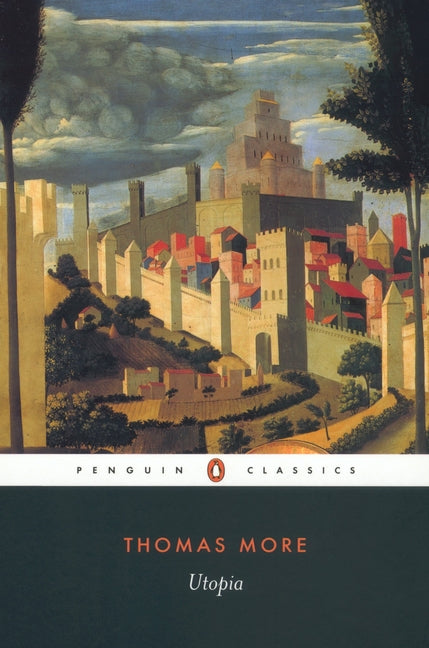
Utopia gave its name to an entire genre and has influenced political thought for five centuries. More's work shaped how we imagine alternative societies and critique existing ones. This Penguin Classics edition provides an authoritative translation with scholarly introduction and notes, making this foundational Renaissance text accessible to contemporary readers.
Perfect for: Readers of Renaissance literature and political philosophy, contemplative readers exploring justice and community, students of Thomas More and utopian thought, those interested in social critique and ideal societies, anyone examining the relationship between private property and the common good, readers seeking wisdom on holding ideals while remaining grounded in reality.
Paperback edition. More's vision of an ideal society—offering contemplative wisdom on justice, community, and using ideals to critique reality while remaining grounded in human nature and practical constraints.
Share