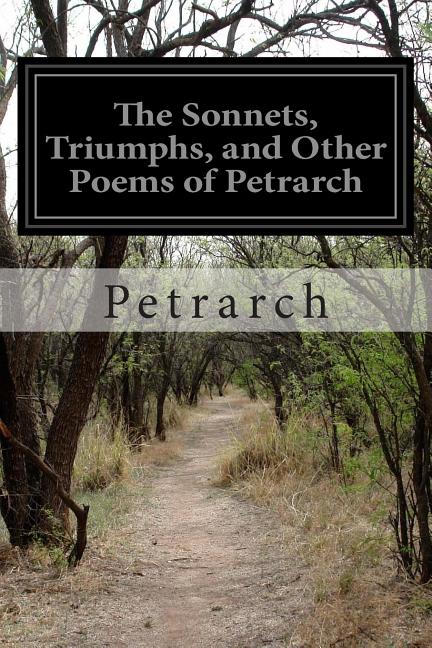
Petrarch
The Sonnets, Triumphs, and Other Poems of Petrarch
The Sonnets, Triumphs, and Other Poems of Petrarch
Couldn't load pickup availability
What is the nature of love and longing? Petrarch (Francesco Petrarca, 1304-1374) is the father of Renaissance lyric poetry, and his Canzoniere (Songbook)—a collection of 366 poems, mostly sonnets—revolutionized European literature. Written over decades in devotion to Laura, a woman he loved from afar, these poems explore unrequited love, desire, beauty, time, and the soul's struggle between earthly passion and spiritual aspiration. Petrarch invented the sonnet form that bears his name (the Petrarchan sonnet) and created a poetic language of love that influenced everyone from Dante to Shakespeare. This is lyric poetry as contemplative practice: the examination of the heart's contradictions and the transformation of longing into art.
The Canzoniere is divided into two parts: poems written during Laura's life and poems written after her death. In life, Laura is idealized—beautiful, virtuous, unattainable. Petrarch's love is both ennobling and tormenting, inspiring poetry while causing suffering. After her death from plague, the poems shift from desire to mourning, from earthly beauty to spiritual reflection. The Triumphs—six allegorical poems—trace the progression from Love's triumph over the poet, to Chastity's triumph over Love, to Death's triumph over Chastity, to Fame over Death, to Time over Fame, and finally to Eternity's triumph over Time. Petrarch's genius lies in his psychological depth: he examines his own contradictions, his inability to renounce earthly love for divine love, and the way longing itself becomes a form of devotion.
For contemplative readers, Petrarch's poetry offers profound meditation on desire, beauty, and the soul's divided loyalties. The work asks: What is the relationship between earthly love and spiritual aspiration? How do we live with unfulfilled longing? What does it mean that beauty inspires both devotion and suffering? How do we transform desire into something that elevates rather than enslaves us? What is the role of time in love—does it destroy or refine? Petrarch's poetry becomes a mirror for examining our own hearts—recognizing the contradictions between what we desire and what we know is good, between attachment and transcendence, and discovering that the contemplative life requires holding both earthly beauty and eternal truth without denying either.
What You'll Discover
- Petrarch's Canzoniere: 366 poems (mostly sonnets) on love, beauty, time, and longing
- Poems to Laura: during her life (desire, beauty, torment) and after her death (mourning, spiritual reflection)
- The Triumphs: allegorical poems on Love, Chastity, Death, Fame, Time, and Eternity
- The invention of the Petrarchan sonnet and the language of Renaissance love poetry
- Psychological depth: the soul's struggle between earthly passion and spiritual aspiration
- Contemplative insights into desire, beauty, and transforming longing into devotion
- Foundational text of Renaissance lyric poetry and humanist literature
Petrarch is considered the first modern poet and the father of humanism. His influence on European literature cannot be overstated—he shaped how poets from Dante to Shakespeare wrote about love, beauty, and the inner life. This collection includes the sonnets, the Triumphs, and other poems, offering readers access to the complete range of Petrarch's lyric genius.
Perfect for: Readers of Renaissance poetry and lyric literature, contemplative readers exploring love and longing, students of Petrarch and the sonnet tradition, those interested in the soul's divided loyalties between earthly and divine love, anyone drawn to poetry that examines the heart's contradictions, readers seeking wisdom on transforming desire into devotion.
Paperback edition. Petrarch's lyric masterpiece—sonnets and triumphs on love, beauty, and time, offering contemplative wisdom on desire, the soul's divided loyalties, and transforming longing into art and devotion.
Share