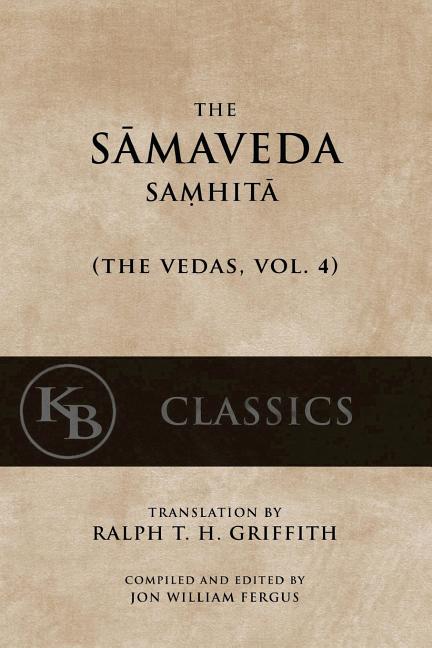
Ralph T. H. Griffth
The Samaveda Samhita
The Samaveda Samhita
Couldn't load pickup availability
The Samaveda Samhita—the Veda of melodies and sacred chants, containing 1,549 verses (most drawn from the Rigveda) set to musical notation for ritual performance, representing the origins of Indian classical music and the sonic dimension of Vedic spirituality composed between 1200-1000 BCE.
The Samaveda (from saman meaning 'melody' or 'chant' and veda meaning 'knowledge') is unique among the four Vedas in its focus on musical performance rather than textual content. While most of its verses are borrowed from the Rigveda, they are transformed through elaborate musical notation (svara) and ritual chanting techniques that turn poetry into sacred song. The Samaveda was chanted by the Udgatri priests during Soma sacrifices, and its melodies were believed to have the power to invoke divine presence, maintain cosmic order, and transport consciousness to transcendent states.
What you'll discover:
- 1,549 verses organized into two main sections: Purvarchika and Uttararchika
- Musical notation (svara) showing how verses should be chanted and sung
- The origins of Indian classical music—ragas, scales, and melodic structures
- Sacred chants (samans) used in Soma rituals and fire sacrifices
- The power of sound (nada) and vibration in spiritual practice
- Connection between music, consciousness, and cosmic harmony
- The role of the Udgatri (chanting priest) in Vedic ritual
- Complete edition with Sanskrit terms and comprehensive indexing
The Samaveda reveals the sonic dimension of Vedic spirituality—the understanding that sound itself is sacred, that properly intoned mantras have transformative power, that music can bridge human and divine realms. The elaborate musical notation preserved in the text shows sophisticated understanding of pitch, rhythm, melodic progression, and the emotional and spiritual effects of different musical modes. This knowledge became the foundation for Indian classical music, with its system of ragas (melodic frameworks) and talas (rhythmic cycles).
What makes the Samaveda essential for your contemplative library is its emphasis on the transformative power of sacred sound. The Vedic seers understood that consciousness responds to vibration, that properly chanted mantras can alter states of awareness, that music can induce meditative absorption. This understanding influenced all later Hindu practice—from the use of Om as the primordial sound, to kirtan (devotional chanting), to nada yoga (the yoga of sound), to the elaborate musical traditions of bhakti devotion.
The text demonstrates that Vedic ritual was not merely symbolic but experiential—the chanting of samans was meant to create specific effects in consciousness, to invoke particular divine energies, to harmonize the microcosm of human awareness with the macrocosm of cosmic order. The Udgatri priest was not just reciting words but performing a sonic technology designed to transform consciousness and reality.
The Samaveda also influenced Buddhist chanting traditions, the development of mantra practice in Tantra, and the use of sound in meditation across all Indian contemplative traditions. The understanding that sound vibration affects consciousness—that certain syllables, when properly intoned, can awaken specific energies or states of awareness—became central to yogic and tantric practice.
This complete edition presents all verses of the Samaveda Samhita with Sanskrit terms and comprehensive indexing, preserving the musical notation that shows how these sacred verses were meant to be chanted. Whether you're interested in the origins of Indian classical music, the role of sound in spiritual practice, or the ritual dimension of Vedic religion, the Samaveda offers unique insights into the sonic foundations of Hindu spirituality.
Perfect for: Students of Hindu philosophy and Vedic literature, musicians and scholars of Indian classical music seeking textual foundations, practitioners of mantra meditation and nada yoga, those interested in the relationship between sound and consciousness, students of comparative religion and ritual studies, readers exploring the origins of sacred chanting traditions, anyone studying the Upanishads seeking their ritual context, and contemplative readers drawn to the transformative power of sacred sound and music in spiritual practice.
This paperback edition presents the complete Samaveda Samhita with Sanskrit terms and comprehensive indexing—the Veda of sacred melodies that reveals the sonic dimension of Vedic spirituality and the origins of Indian classical music.
Share