Abraham Joshua Heschel
Abraham Joshua Heschel: The Sabbath
Abraham Joshua Heschel: The Sabbath
Couldn't load pickup availability
What does it mean to build a sanctuary not in space, but in time—to create holiness not through monuments of stone but through moments of rest, presence, and sacred attention? Abraham Joshua Heschel's The Sabbath is a luminous meditation on the meaning of the Seventh Day, a brief yet profound exploration of time, eternity, and the architecture of holiness. Hailed as a classic of Jewish spirituality since its original publication in 1951, this elegant work has been read by thousands of people across traditions seeking meaning, peace, and a deeper relationship with the sacred in modern life.
At first glance, the Sabbath might seem like a day of restriction—a list of prohibitions and rituals. But Heschel reveals something far more beautiful: the Sabbath is a palace in time, a cathedral built not of stone but of hours, a sanctuary where we step out of the relentless demands of space and productivity to dwell in eternity. In a world obsessed with things, with accumulation and achievement, Judaism offers a radical alternative: a religion of time, where holiness is found not in what we possess but in how we are present. Heschel invites us to discover the Sabbath as a taste of Eden, a weekly return to the peace and wholeness that existed before the fall, a gift that reminds us we are more than what we produce or consume.
For readers seeking contemplative wisdom, The Sabbath offers a profound guide to rest, presence, and the sanctification of time. Heschel doesn't offer techniques or rules; he invites us into a vision of life where time itself becomes holy, where rest is not laziness but a form of worship, where we learn to be rather than merely to do. This is a book for anyone who feels overwhelmed by the pace of modern life, who longs for peace and sacred time, who seeks to reclaim rest as a spiritual practice. It's a reminder that the deepest holiness is not found in grand achievements or sacred spaces but in the simple, weekly practice of stopping, resting, and remembering that we are beloved children of God, not machines of productivity.
What You'll Discover
- Abraham Joshua Heschel's classic meditation on the Sabbath and sacred time
- The "architecture of holiness": building sanctuaries in time, not space
- Judaism as a religion of time: finding meaning in eternity, not material things
- The Sabbath as a palace in time, a taste of Eden, a weekly return to peace
- Exploration of rest, presence, and the sanctification of ordinary moments
- Profound questions on time, holiness, and what it means to truly be
Abraham Joshua Heschel (1907-1972) was a Polish-American rabbi, theologian, and philosopher who became one of the most influential Jewish thinkers of the 20th century. Descended from Hasidic masters, Heschel fled Nazi Europe and settled in the United States, where he taught at Jewish Theological Seminary and became a leading voice for civil rights, interfaith dialogue, and spiritual renewal. His work bridges Jewish mysticism, existential philosophy, and prophetic social justice, emphasizing wonder, awe, and the presence of God in everyday life. The Sabbath, published in 1951, is his most beloved and accessible work, offering a vision of sacred time that has inspired readers across traditions to reclaim rest, presence, and holiness in their own lives.
Perfect for: Readers seeking contemplative wisdom on rest and sacred time, those overwhelmed by modern life's pace, students of Jewish spirituality and theology, anyone interested in Sabbath practice across traditions, readers drawn to Heschel's philosophy of wonder and presence, admirers of interfaith spiritual classics, seekers exploring the sanctification of time and ordinary moments, students of Jewish existentialism and mysticism, those interested in the intersection of spirituality and social justice.
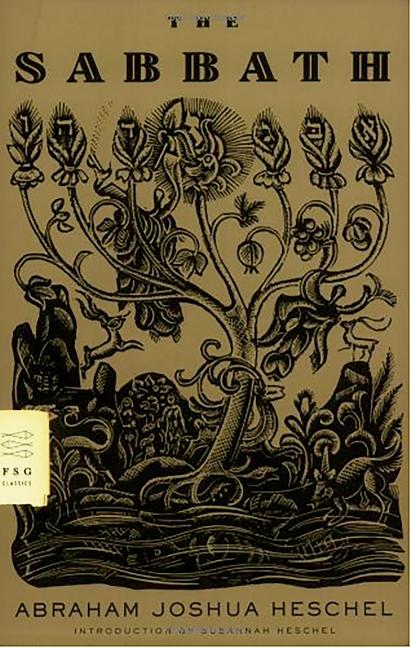
Farrar, Straus and Giroux paperback edition with illustrations by Ilya Schor. Heschel's spiritual masterpiece—offering a luminous meditation on time, rest, and the architecture of holiness.
Share