Guillaume de Lorris and Jean de Meun
The Romance of the Rose
The Romance of the Rose
Couldn't load pickup availability
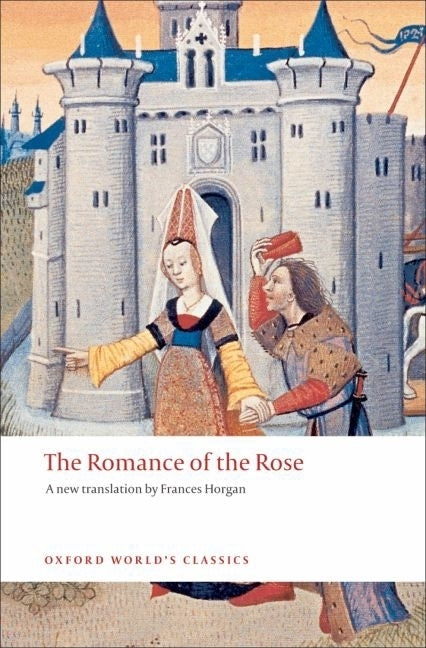
What is the nature of love and desire? The Romance of the Rose—begun by Guillaume de Lorris around 1230 and vastly expanded by Jean de Meun around 1275—is the most popular and influential allegorical romance of the Middle Ages. What begins as a courtly love dream vision—a young lover's quest to pluck a rose in an enchanted garden—becomes an encyclopedic exploration of medieval thought, encompassing philosophy, theology, science, social satire, and the nature of human desire. This is allegory as intellectual adventure, where personified abstractions (Reason, Nature, Jealousy, Fair Welcome) debate everything from predestination to optics, from the Franciscan controversy to the art of seduction.
Guillaume de Lorris's opening section (c. 1230) presents the classic courtly love narrative: the Lover enters the Garden of Delight, sees the Rose, and falls in love. Personifications guide and obstruct him—Reason counsels restraint, Fair Welcome encourages approach, Danger and Jealousy build walls. The quest is delicate, psychological, focused on the inner experience of desire. Then Jean de Meun (c. 1275) takes over and transforms the work into something far more ambitious and subversive. His continuation explodes the courtly love framework, introducing philosophical debates, satirical attacks on hypocrisy (especially in the Church and among women), and a celebration of Nature's generative power. The Rose becomes not just an object of courtly devotion but a symbol of natural desire, procreation, and the tension between idealized love and bodily reality.
For contemplative readers, The Romance of the Rose offers profound meditation on desire, reason, and the relationship between ideals and nature. The work asks: What is the difference between courtly idealization and natural desire? How do we navigate the tension between Reason's counsel and the heart's longing? What role does allegory play in understanding our inner life? How do we discern between authentic love and self-deception? The poem becomes a mirror for examining the personified forces within us—reason and passion, restraint and impulse, idealization and embodiment. Jean de Meun's irreverent expansion suggests that the contemplative life requires not just refined sentiment but honest reckoning with nature, desire, and the gap between how we think we should love and how we actually do.
What You'll Discover
- The most influential medieval allegorical romance (c. 1230-1275)
- Guillaume de Lorris's courtly love dream vision: the quest for the Rose
- Jean de Meun's vast continuation: philosophy, satire, and natural desire
- Personified abstractions debating love, reason, nature, and human behavior
- Medieval thought on predestination, optics, social hypocrisy, and the art of love
- Contemplative insights into desire, reason, and the tension between ideals and nature
- Major influence on Chaucer and European allegorical tradition
The Romance of the Rose was the most widely read secular work of the Middle Ages, influencing Chaucer, Dante, and countless others. Its combination of courtly refinement and philosophical depth, idealism and satire, makes it one of the most complex and fascinating works of medieval literature. This Oxford World's Classics edition provides an accessible translation with scholarly introduction and notes.
Perfect for: Readers of medieval literature and allegorical romance, contemplative readers exploring desire and reason, students of Guillaume de Lorris and Jean de Meun, those interested in courtly love and medieval philosophy, anyone drawn to works that examine the inner life through personified abstractions, readers seeking wisdom on the tension between ideals and embodied reality.
Paperback edition. The medieval masterpiece of allegorical romance—a quest for the Rose that becomes an encyclopedic exploration of love, desire, reason, and nature, offering contemplative wisdom on the forces within us and the gap between how we think we should love and how we actually do.
Share