Philip B. Yampolsky
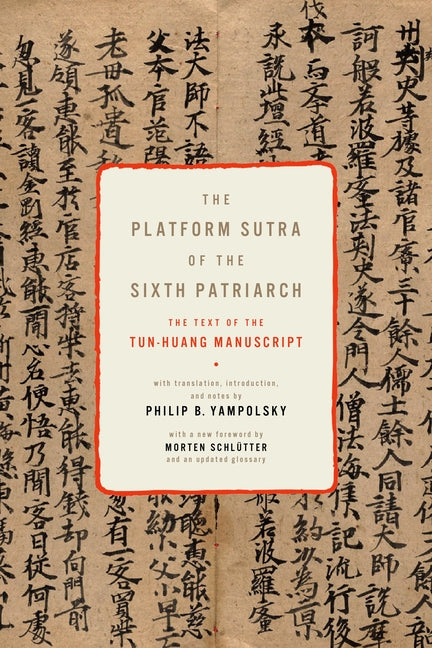
The Platform Sutra of the Sixth Patriarch
The Platform Sutra of the Sixth Patriarch
Couldn't load pickup availability
What does it mean to encounter sudden enlightenment—to read the only Chinese Buddhist text honored with the title 'sutra,' presenting the revolutionary teachings of an illiterate woodcutter who achieved awakening and transformed Chan Buddhism forever? The Platform Sutra of the Sixth Patriarch presents Huineng's (638–713 CE) teachings on sudden enlightenment, Buddha nature, and direct realization that profoundly influenced all of East Asian Zen. This is not gradual cultivation but direct pointing to mind, by the Sixth Patriarch of Chan Buddhism who shows that enlightenment is not a distant goal but the recognition of what has always been present.
Huineng was an illiterate woodcutter who achieved enlightenment upon hearing a single line from the Diamond Sutra. His teachings, recorded by his disciples, revolutionized Chinese Buddhism by emphasizing sudden enlightenment over gradual cultivation, direct insight over scriptural study, and the inherent Buddha nature present in all beings. The text opens with the famous verse contest between Huineng and the learned monk Shenxiu. Shenxiu wrote: 'The body is the Bodhi tree, the mind is like a clear mirror. At all times we must strive to polish it, and must not let dust collect.' Huineng responded: 'Bodhi originally has no tree, the mirror has no stand. Buddha nature is always clean and pure; where is there room for dust?' This exchange crystallizes sudden realization versus gradual cultivation.
For readers seeking contemplative wisdom and the foundations of Zen practice, the Platform Sutra serves as both foundational scripture and radical teaching on direct realization. Huineng teaches no-thought (not stopping thoughts but not clinging to them), no-form (formless precepts emphasizing spirit over letter), and non-abiding (meditation as awareness in all activities, not just sitting). This is a book for students and practitioners of Zen Buddhism, for readers interested in Chan Buddhism and sudden enlightenment, for those drawn to direct realization teachings, for practitioners seeking to understand the foundations of Zen. It's a reminder that meditation and wisdom are one, that Buddha nature is inherent in all beings, and that enlightenment is seeing one's true nature here and now.
What You'll Discover
- Sudden enlightenment: awakening happens in an instant, not gradually
- Buddha nature: the inherent enlightened nature present in all beings
- No-thought, no-form, non-abiding: the essence of Zen meditation
- The famous verse contest defining sudden vs. gradual paths
- Direct pointing to mind: seeing one's true nature beyond words and concepts
Huineng (638–713 CE), the Sixth Patriarch of Chan Buddhism, transformed Chinese Buddhism with his teaching of sudden enlightenment. The Platform Sutra profoundly influenced all schools of Chan/Zen Buddhism and shaped Korean Seon, Japanese Zen, and Vietnamese Thiền. This translation by Philip Yampolsky is considered the definitive scholarly edition in English, presenting the Dunhuang manuscript (the earliest version) with extensive historical introduction, annotations, and commentary. Yampolsky's work makes this foundational Zen text accessible while preserving its philosophical depth and historical authenticity.
Perfect for: Students and practitioners of Zen Buddhism, readers interested in Chan Buddhism and Chinese spiritual traditions, those drawn to sudden enlightenment and direct realization teachings, students of Buddhist philosophy and meditation, practitioners seeking to understand the foundations of Zen practice, readers interested in the history of East Asian Buddhism, anyone questioning gradual spiritual paths and seeking direct insight, contemplative readers drawn to the radical simplicity of seeing one's true nature here and now, those ready to encounter the foundational text of Chan/Zen Buddhism.
Paperback edition. Philip Yampolsky's definitive translation of the Platform Sutra—the foundational text of Chan/Zen Buddhism on sudden enlightenment, Buddha nature, and direct realization.
Share