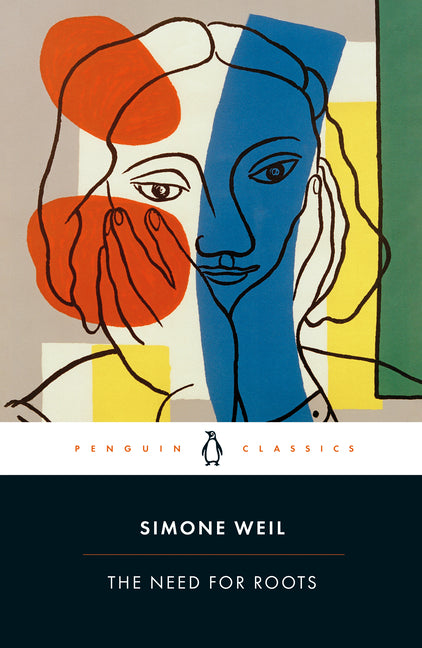
Simone Weil
The Need for Roots: Prelude to a Declaration of Obligations Towards the Human Being
The Need for Roots: Prelude to a Declaration of Obligations Towards the Human Being
Couldn't load pickup availability
Simone Weil's The Need for Roots stands as one of the most profound meditations on community, obligation, and the spiritual foundations of political life written in the twentieth century.
Composed in London during the final year of her life while working for the Free French resistance, this work was intended as a blueprint for the moral and spiritual reconstruction of France after World War II. Yet Weil's diagnosis transcends its historical moment: she identifies uprootedness—the severing of individuals from tradition, community, and meaningful work—as the central malaise of modern life, a condition that leaves people spiritually adrift and vulnerable to totalitarian ideologies.
What distinguishes this work is Weil's integration of the political and the sacred. She argues that before we can speak of rights, we must first understand obligations—the duties we owe to one another as human beings and the conditions necessary for the soul to flourish. She explores the needs of the soul (order, liberty, obedience, responsibility, equality, honor, truth) and the social, cultural, and spiritual structures required to nourish them.
Key Themes:
- Uprootedness as the defining crisis of modernity
- Obligations toward the human being and the needs of the soul
- The relationship between community, tradition, and spiritual vitality
- Work, labor, and the dignity of the human person
- The role of culture, education, and spiritual practice in political life
- Critique of materialism, nationalism, and ideological thinking
- Vision for a society rooted in truth, justice, and compassion
Why This Text Matters:
Weil's work speaks directly to contemporary crises: alienation, loneliness, the erosion of community, the loss of meaning in work, and the rise of extremism. Her vision of politics grounded in spiritual obligation rather than abstract rights offers a radical alternative to both liberal individualism and collectivist ideologies. Described by Albert Camus as "the only great spirit of our time" and by André Gide as "the patron saint of all outsiders," Weil writes with the authority of someone who lived her philosophy—working in factories, fighting in the Spanish Civil War, and ultimately giving her life in service to truth and justice.
Ideal for: Students of political philosophy, scholars of Simone Weil, spiritual seekers concerned with social justice, anyone grappling with questions of community and belonging, and readers seeking a vision of political life rooted in spiritual depth and moral obligation.
Quality paperback edition. An essential text for anyone seeking to understand the spiritual foundations of a just and rooted society.
Share