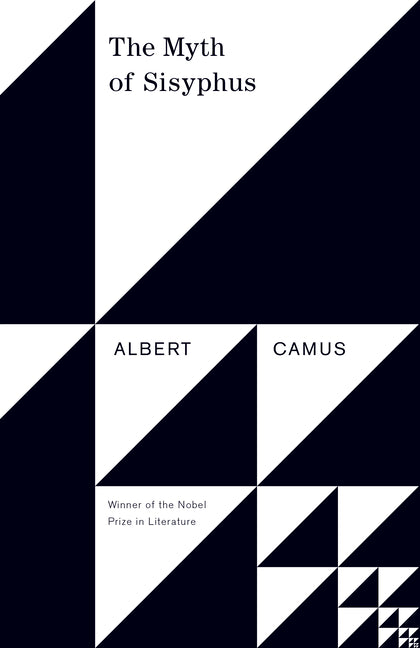
Albert Camus
The Myth of Sisyphus
The Myth of Sisyphus
Couldn't load pickup availability
Albert Camus's The Myth of Sisyphus—the foundational text of absurdism presenting a profound meditation on whether life is worth living in a universe without inherent meaning, concluding that we must imagine Sisyphus happy as he embraces his fate, establishing the philosophy of revolt and affirmation in the face of the absurd.
Albert Camus (1913-1960), Nobel Prize-winning novelist and philosopher, published The Myth of Sisyphus in 1942 during the Nazi occupation of France. The essay begins with philosophy's most fundamental question: "There is only one really serious philosophical problem, and that is suicide." In a world without God, without ultimate meaning or purpose, why should we continue living? Camus's answer—that we must revolt against the absurd by living fully and consciously—established absurdism as a major existentialist philosophy and offered a path between nihilistic despair and false hope.
What you'll discover:
- The absurd—the confrontation between human need for meaning and the universe's silence
- Why suicide is not the answer to the absurd condition
- Philosophical suicide—escaping into false hope, religion, or abstract systems
- The three consequences of absurdism: revolt, freedom, and passion
- Sisyphus as the absurd hero—eternally pushing his boulder yet imagining him happy
- Living without appeal—embracing life fully despite its meaninglessness
- The absurd man—Don Juan, the actor, the conqueror, the creator
- How to live with lucidity, intensity, and joy in an absurd world
Camus's central insight is that life's meaninglessness is not a reason for despair but a call to freedom and intensity. The absurd arises from the confrontation between our human longing for clarity and meaning and the universe's unreasonable silence. We cannot escape this condition—suicide eliminates the confronter, philosophical suicide (religion, ideology) denies the absurd through false hope. The only authentic response is revolt: to live fully, consciously, and passionately while acknowledging the absurd. Sisyphus, condemned to eternally roll his boulder uphill only to watch it roll down again, becomes the absurd hero when he embraces his fate—"One must imagine Sisyphus happy."
What makes The Myth of Sisyphus essential is its lyrical wisdom and practical relevance. Unlike abstract philosophy, Camus writes with literary beauty and concrete examples, addressing the lived experience of meaninglessness that many face. His philosophy influenced existentialism, postwar literature, and contemporary discussions of meaning and purpose. The essay offers not despair but liberation—if nothing has ultimate meaning, we are free to create our own values and live with intensity and joy.
Perfect for: Students of existentialism and absurdist philosophy, readers of Camus's novels seeking his philosophical foundations, those grappling with questions of meaning and purpose, students of Continental philosophy and French existentialism, readers interested in philosophy as response to life's fundamental questions, anyone seeking wisdom for living authentically in an uncertain world, and contemplative readers drawn to beautifully written philosophical essays that address the human condition.
This paperback edition presents Camus's complete The Myth of Sisyphus—the Nobel Prize-winning philosopher's profound meditation on the absurd and how to live with revolt, freedom, and passion in a meaningless universe.
Share