Anonymous
The Mahabharata
The Mahabharata
Couldn't load pickup availability
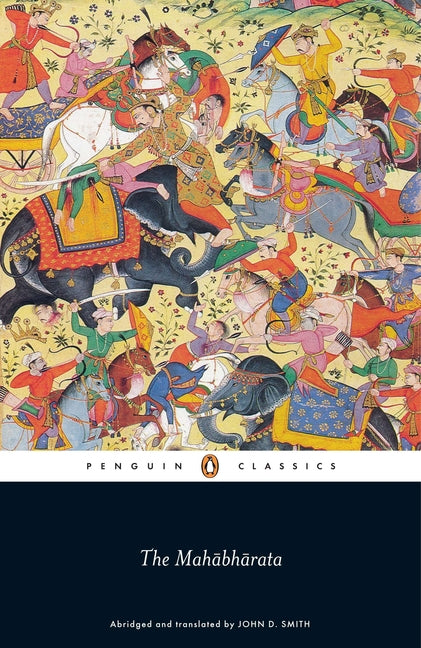
What is the nature of dharma when duty conflicts with compassion, when righteousness demands terrible sacrifice? The Mahabharata is the great epic of India—one of the longest poems ever composed, with over 100,000 stanzas of verse that tell the story of a devastating family war and the profound questions of duty, justice, and human nature it raises. Composed in Sanskrit between 400 BCE and 400 CE, the epic centers on the conflict between two branches of the Kuru dynasty—the righteous Pandavas and their cousins the Kauravas—whose struggle for the throne culminates in the catastrophic eighteen-day battle of Kurukshetra. But the Mahabharata is far more than a war story; it is a vast compendium of Hindu philosophy, ethics, mythology, and spiritual teaching that explores dharma (duty), artha (purpose), kama (pleasure), and moksha (liberation) through unforgettable characters, moral dilemmas, and timeless wisdom.
The epic's narrative encompasses the entire cosmos—gods and demons, sages and warriors, magic and miracles—while remaining deeply human in its exploration of ambition, loyalty, betrayal, love, and loss. At its heart is the Bhagavad Gita, the sacred dialogue between the warrior Arjuna and the god Krishna on the eve of battle, which addresses the fundamental questions of duty, action, and devotion. The Mahabharata presents dharma not as simple rules but as complex, context-dependent wisdom that must be discerned in the midst of impossible choices. The Pandavas, though righteous, must employ deception to win the war; the Kauravas, though flawed, include noble warriors fighting for their king. The epic asks: When does duty require violence? How do we act righteously when all choices lead to harm? What is the relationship between divine will and human responsibility? The text has shaped Hindu culture, ethics, and spirituality for over two millennia, offering not easy answers but profound meditation on the human condition.
For contemplative readers, The Mahabharata offers inexhaustible wisdom on living with integrity in a morally complex world. The work asks: What is dharma when duties conflict? How do we navigate the tension between personal desire and social obligation? What does it mean to act without attachment to results? How do we maintain our humanity in the midst of violence and loss? What is the role of fate versus free will in shaping our lives? How do we live with the consequences of our choices, even when we acted righteously? The epic becomes a mirror for contemplating our own struggles with duty, ambition, loyalty, and the search for meaning in a world where righteousness does not guarantee happiness and where even the gods cannot prevent suffering.
What You'll Discover
- A carefully selected edition from the vast 100,000-stanza epic
- The story of the Pandavas and Kauravas and the great war of Kurukshetra
- Profound teachings on dharma, duty, justice, and righteous action
- The Bhagavad Gita and other philosophical dialogues embedded in the narrative
- Exploration of artha (purpose), kama (pleasure), and moksha (liberation)
- Unforgettable characters: Krishna, Arjuna, Draupadi, Bhishma, Karna
- A mythic world of warfare, magic, beauty, and moral complexity
- One of the foundational texts of Hindu culture and world literature
The Mahabharata is traditionally attributed to the sage Vyasa, who is said to have composed the epic and also appears as a character within it. Composed over several centuries (c. 400 BCE–400 CE), the text grew from a core narrative about a dynastic war into a vast encyclopedia of Hindu knowledge, incorporating philosophy, law, cosmology, and devotional teaching. This Penguin Classics edition presents a carefully selected translation that captures the essential narrative and philosophical teachings of the epic, making this monumental work accessible to modern readers. The edition includes scholarly introduction and notes that illuminate the cultural and spiritual context of this magnificent text.
Perfect for: Students of Hindu literature and philosophy, readers who loved the Ramayana and Bhagavad Gita, contemplative readers exploring dharma and ethical complexity, those interested in epic poetry and world mythology, scholars of Indian culture and spirituality, anyone drawn to profound questions of duty, justice, and human nature, readers seeking timeless wisdom on living with integrity in a morally ambiguous world.
Paperback edition. The great epic of India—offering contemplative wisdom on dharma, duty, and the human condition through one of the longest and most influential poems ever composed in the Hindu tradition.
Share