Hendrik Kern
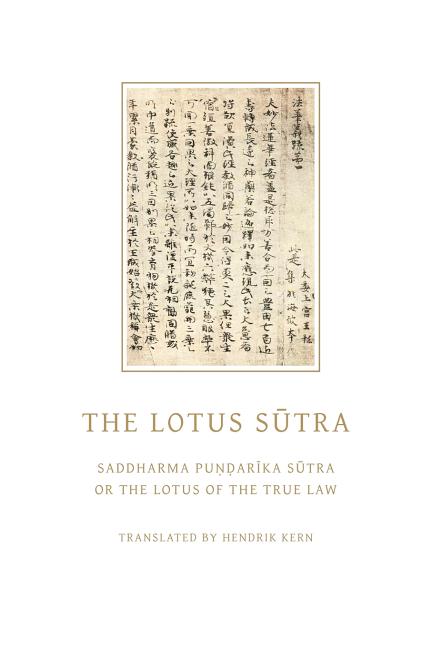
The Lotus Sutra: Saddharma Pundarika Sutra or the Lotus of the True Law
The Lotus Sutra: Saddharma Pundarika Sutra or the Lotus of the True Law
Couldn't load pickup availability
What is the ultimate teaching of the Buddha? The Lotus Sutra (Saddharma Pundarika Sutra, or "Lotus of the True Law") is one of the most influential and beloved texts in Mahayana Buddhism—a profound scripture that reveals the Buddha's final and complete teaching on the universal potential for enlightenment. Composed in India around the 1st century CE and revered across East Asia for nearly two millennia, the sutra teaches that all beings possess Buddha-nature and can attain awakening, that the Buddha's lifespan is eternal, and that his teachings are skillful means adapted to the capacity of each listener. Through vivid parables—the burning house, the prodigal son, the hidden jewel—the Lotus Sutra transforms our understanding of the Buddhist path, revealing that there is ultimately only one vehicle (yana) to liberation, not three separate paths as earlier teachings suggested.
The sutra unfolds through twenty-eight chapters filled with cosmic imagery, miraculous events, and profound teachings. The Buddha reveals that his earlier teachings on different paths to liberation were provisional, adapted to the understanding of his listeners, but that the ultimate truth is the One Vehicle (Ekayana) in which all beings are destined for complete enlightenment. The famous parables illustrate this teaching: a father uses the promise of toy carts to lure his children from a burning house (skillful means to save beings from suffering), a son who left home returns unrecognized and must gradually be prepared to receive his inheritance (our Buddha-nature is already ours but we must awaken to it), a precious jewel sewn into a poor man's robe goes unnoticed until revealed (enlightenment is already present within us). The sutra also teaches the eternal nature of the Buddha, the bodhisattva path of compassionate action, and the merit of upholding and teaching this scripture.
For contemplative readers, the Lotus Sutra offers profound meditation on the nature of enlightenment, compassion, and the skillful adaptation of truth to circumstance. The work asks: What does it mean that all beings can attain Buddhahood? How does the Buddha adapt his teaching to meet each person where they are? What is the relationship between provisional and ultimate truth? How do we recognize the Buddha-nature already present within us? What does it mean to practice the bodhisattva path of saving all beings? How do we hold both the urgency of practice and the assurance of eventual awakening? The Lotus Sutra becomes essential reading for understanding Mahayana Buddhism—not abstract philosophy but a vision of universal liberation that has inspired countless practitioners to dedicate their lives to the awakening of all beings.
What You'll Discover
- The Buddha's teaching on the One Vehicle and universal enlightenment
- Famous parables: the burning house, the prodigal son, the hidden jewel
- The eternal nature of the Buddha and the bodhisattva path
- Skillful means (upaya) and the adaptation of teaching to capacity
- The doctrine that all beings possess Buddha-nature
- Hendrik Kern's rare translation directly from Sanskrit (not Chinese)
- Based on a 1039 CE palm leaf manuscript from Nepal
- One of the most influential scriptures in East Asian Buddhism
The Lotus Sutra was composed in India around the 1st century CE and became one of the most important texts in Chinese, Japanese, and Korean Buddhism. Hendrik Kern (1833–1917) was a distinguished Dutch Orientalist and Sanskrit scholar who produced this rare translation directly from the original Sanskrit rather than from the Chinese translation of Kumarajiva. Working from a palm leaf manuscript written in Nepal in 1039 (part of the collection of Dr. Daniel Wright at Cambridge University Library), Kern's translation preserves the Sanskrit terminology and provides access to the sutra in its original language. This edition includes modern diacritical marks for Sanskrit terms, making it valuable for both scholars and contemplative readers.
Perfect for: Students of Mahayana Buddhism and East Asian Buddhist traditions, readers exploring the foundational texts of Buddhism, contemplative practitioners drawn to the bodhisattva path, those interested in the doctrine of universal enlightenment and Buddha-nature, scholars seeking a Sanskrit-based translation, anyone drawn to the parables and cosmic vision of the Lotus teaching, readers of the Diamond Sutra, Heart Sutra, and other Mahayana scriptures.
Paperback edition. The Buddha's ultimate teaching on universal enlightenment—offering contemplative wisdom on Buddha-nature, skillful means, and the One Vehicle through one of the most revered scriptures in the Mahayana tradition.
Share