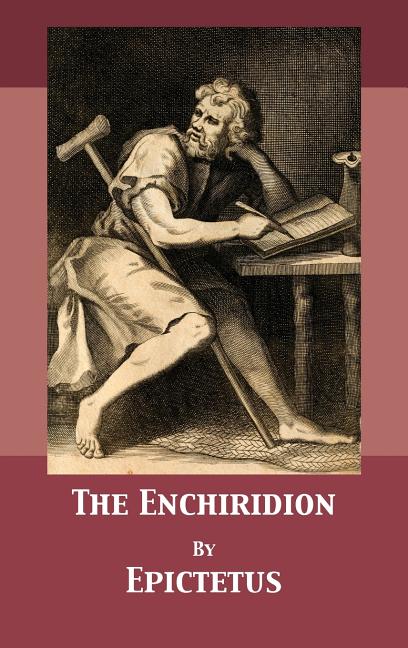
Epictetus
The Enchiridion
The Enchiridion
Couldn't load pickup availability
What is within our control? Epictetus' Enchiridion ("Handbook," early 2nd century CE) is one of the most accessible and practical guides to Stoic philosophy ever written—a concise manual for living with tranquility, resilience, and virtue. Compiled by Epictetus' student Arrian from the master's lectures, the Enchiridion distills Stoic wisdom into brief, memorable precepts that address the fundamental challenge of human life: how to maintain inner peace in a world we cannot control. Born into slavery and physically disabled, Epictetus taught that true freedom lies not in external circumstances but in how we respond to them. The Enchiridion teaches the discipline of desire (wanting only what is within our power), the discipline of action (acting with virtue and social responsibility), and the discipline of assent (judging events correctly and avoiding false beliefs).
Epictetus organizes his handbook around the central Stoic distinction: some things are up to us (our judgments, desires, intentions, actions) and some things are not (our body, reputation, wealth, others' opinions). Happiness and freedom come from focusing entirely on what is within our control and accepting with equanimity what is not. He offers practical guidance on how to handle insults, loss, difficult people, and adversity—not by changing external events but by changing our relationship to them. The Enchiridion teaches us to view challenges as opportunities for practicing virtue, to remember that we are actors in a play written by fate (our job is to play our role well, not to choose the role), and to cultivate gratitude for what we have while holding it lightly. The work's genius lies in its practicality: these are not abstract theories but daily exercises for training the mind toward freedom and peace.
For contemplative readers, the Enchiridion offers profound meditation on freedom, acceptance, and the art of living well. The work asks: What is truly within our control, and what must we accept? How do we find freedom in a world of constraint and suffering? What does it mean to desire that things should be exactly as they are? How do we respond to loss, insult, and adversity with equanimity? What is the relationship between virtue and happiness? How do we live in harmony with nature and our social roles? Epictetus' Enchiridion becomes a daily companion for the contemplative life—a handbook for cultivating inner freedom, accepting what we cannot change, acting with integrity in what we can, and finding peace through alignment with reason and nature.
What You'll Discover
Epictetus' practical Stoic manual for tranquility and freedom (early 2nd century CE)
The fundamental distinction: what is up to us and what is not
Disciplines of desire, action, and assent for daily practice
How to handle adversity, loss, insults, and difficult people with equanimity
The path to freedom through accepting what we cannot control
Contemplative insights into virtue, acceptance, and living in harmony with nature
One of the most accessible and practical guides to Stoic philosophy
Epictetus (c. 50-135 CE) was born into slavery in Phrygia, suffered a permanent physical disability, and was eventually freed to become one of the most influential Stoic philosophers. He established a school in Nicopolis where he taught that true freedom comes from within, regardless of external circumstances. His student Arrian compiled his teachings into the Discourses and the Enchiridion, which have guided seekers of wisdom from Marcus Aurelius to modern readers seeking practical philosophy for daily life.
Perfect for: Readers of Stoic philosophy and ancient wisdom, contemplative readers seeking practical guidance for daily life, those interested in resilience and inner freedom, students of Epictetus and Roman philosophy, anyone facing adversity or seeking peace through acceptance, readers drawn to concise, actionable wisdom, those exploring the relationship between virtue and happiness.
Hardcover edition. Epictetus' essential Stoic handbook—offering contemplative wisdom on what is within our control, how to cultivate inner freedom, and the daily practice of acceptance, virtue, and tranquility.
Share