Dante Alighieri
The Divine Comedy
The Divine Comedy
Couldn't load pickup availability
The supreme masterpiece of medieval literature—Dante Alighieri's visionary epic journey through Hell, Purgatory, and Paradise, a profound synthesis of theology, philosophy, and poetry that stands as one of the greatest works of world literature and a transformative meditation on sin, redemption, and divine love.
Dante Alighieri (1265-1321) wrote The Divine Comedy during his exile from Florence, creating an epic poem that would define Italian literature and shape Western culture for centuries. The poem follows Dante himself as he journeys through the three realms of the afterlife—guided by the Roman poet Virgil through Hell and Purgatory, and by his beloved Beatrice through Paradise—encountering historical figures, mythological beings, and profound theological truths along the way.
What you'll discover:
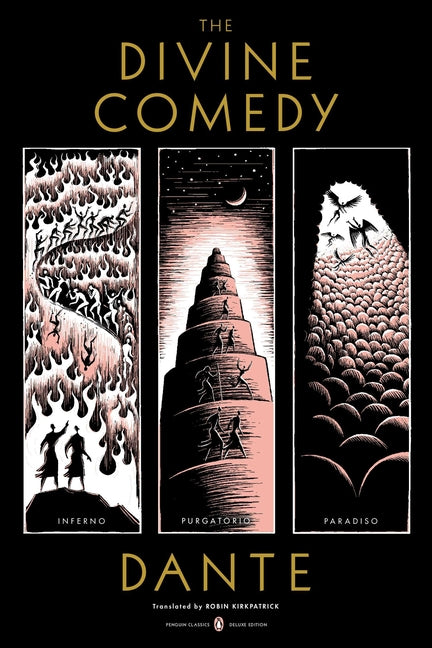
- Inferno—the harrowing descent through the nine circles of Hell
- Purgatorio—the ascent of the mountain where souls are purified
- Paradiso—the mystical vision of Heaven and union with God
- Vivid encounters with historical and mythological figures from Odysseus to Beatrice
- Profound meditations on sin, justice, free will, and divine love
- Beautiful terza rima verse that creates an unforgettable rhythm and flow
- Synthesis of classical philosophy (Aristotle, Virgil) and Christian theology (Aquinas, Augustine)
- A spiritual journey from darkness to light, despair to hope, sin to salvation
The Divine Comedy is structured in three canticles of 33 cantos each (plus one introductory canto), creating a perfect symmetry that reflects divine order. Dante's Hell is organized according to the nature and severity of sins, his Purgatory shows souls actively choosing purification, and his Paradise reveals the beatific vision of God as pure light and love. Throughout, Dante encounters figures from history, mythology, and his own life—from Paolo and Francesca's tragic love to Ulysses' final voyage, from his political enemies suffering in Hell to saints and angels in Paradise.
What makes this work essential is its universal scope and profound humanity. Dante addresses the deepest questions of existence—Why do we suffer? What is justice? How can we be saved? What is the nature of God and love?—through vivid narrative, psychological insight, and theological depth. He writes with equal power about political corruption and divine mystery, human passion and celestial beauty, creating a work that is simultaneously a personal spiritual journey, a political commentary, and a cosmic vision.
The poem's influence is immeasurable. It established Italian as a literary language, shaped Christian imagination about the afterlife, influenced everyone from Chaucer to T.S. Eliot, and continues to inspire artists, theologians, and seekers. Dante references Boethius's Consolation of Philosophy, draws on Augustine's theology, and creates a synthesis of medieval thought that remains profoundly relevant to contemporary spiritual and philosophical questions.
This Penguin Classics edition features an excellent translation that captures both the poetic beauty and theological depth of Dante's masterwork, along with helpful notes and introduction that illuminate the historical, literary, and spiritual context.
Perfect for: Students of medieval literature and Christian theology, readers of epic poetry and visionary literature, those interested in the intersection of philosophy and spirituality, readers of Augustine, Boethius, and medieval thought, anyone seeking profound meditations on sin, redemption, and divine love, students of Italian literature and culture, those drawn to mystical visions and spiritual journeys, and anyone ready to experience one of the greatest works of world literature.
This paperback edition presents Dante's complete Divine Comedy—a visionary epic that continues to illuminate the human journey from darkness to light, from sin to salvation, from earth to Heaven.
Share