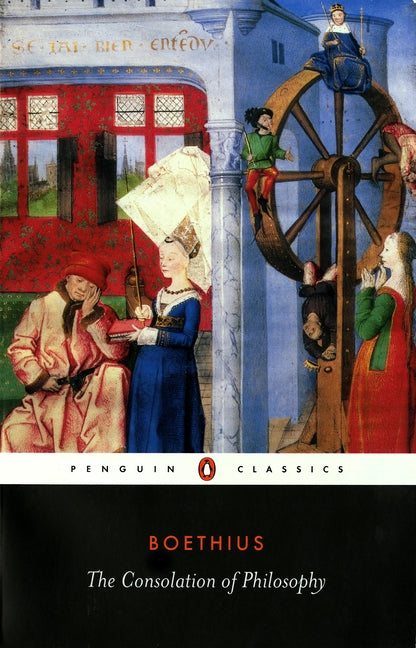
Ancius Boethius
The Consolation of Philosophy
The Consolation of Philosophy
Couldn't load pickup availability
One of the most influential books of the Middle Ages—Boethius's profound philosophical dialogue written in prison while awaiting execution, exploring fate, free will, divine providence, and the nature of true happiness through reason and contemplation.
Anicius Manlius Severinus Boethius (c. 480-524 AD) was a Roman senator, philosopher, and translator who served under the Ostrogothic king Theodoric. Falsely accused of treason and imprisoned, Boethius wrote The Consolation of Philosophy while awaiting his execution—a work that would become one of the most widely read and influential books in Western civilization for over a thousand years, bridging classical philosophy and medieval Christian thought.
What you'll discover:
- A dialogue between Boethius and Lady Philosophy, who appears to console him in prison
- Exploration of fate, fortune, free will, and divine providence
- The nature of true happiness and the highest good
- How to find peace and wisdom in the face of suffering and injustice
- The relationship between God's foreknowledge and human freedom
- Why worldly goods—wealth, power, fame—cannot bring lasting happiness
- Beautiful blend of prose and poetry in alternating sections
- Synthesis of Platonic, Aristotelian, and Stoic philosophy
Written in alternating prose and verse, the Consolation takes the form of a dialogue between the imprisoned Boethius and Lady Philosophy, who appears to him as a vision. She systematically dismantles his despair by showing him that true happiness cannot depend on fortune, which is by nature changeable. Instead, she guides him to understand that the highest good is found in God, who is eternal, unchanging, and the source of all goodness. Through reason and contemplation, Boethius comes to see his suffering in the context of divine providence.
What makes this book essential is its timeless wisdom about suffering, fortune, and the search for meaning. Boethius faces his own imminent death with philosophical courage, using reason to transcend his circumstances. His questions—Why do the innocent suffer? How can we be free if God knows the future? What is true happiness?—are as urgent today as they were 1,500 years ago. The book influenced everyone from Dante and Chaucer to C.S. Lewis and continues to speak to anyone facing adversity or seeking wisdom about life's deepest questions.
This Penguin Classics edition features an excellent translation that captures both the philosophical depth and literary beauty of the original, along with an introduction and notes that illuminate the historical context and philosophical significance of this masterwork.
Perfect for: Students of medieval literature and philosophy, readers of classical philosophy and Stoicism, those interested in the problem of evil and divine providence, anyone facing suffering or adversity seeking philosophical consolation, readers of Plato, Augustine, and medieval thought, students of the history of ideas, and anyone asking timeless questions about fate, freedom, and the nature of happiness.
This paperback edition presents Boethius's timeless masterwork—a profound meditation on philosophy's power to console and transform, written in the shadow of death.
Share