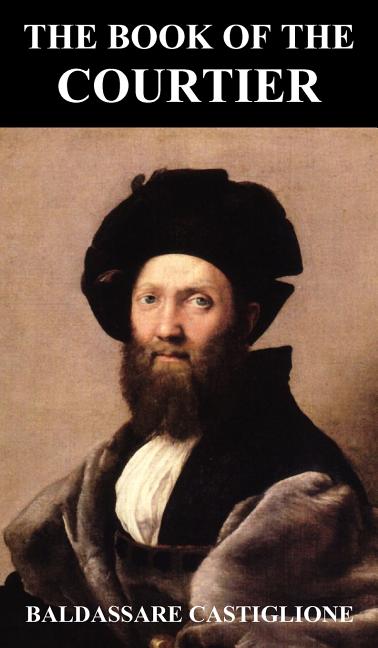
Baldesar Castiglione
The Book of the Courtier
The Book of the Courtier
Couldn't load pickup availability
What does it mean to be cultivated? Baldassare Castiglione's The Book of the Courtier (1528) defines the Renaissance ideal of the perfect courtier—and by extension, the cultivated person. Set as a series of conversations at the refined court of Urbino, this work explores the qualities that make someone truly excellent: grace, wit, learning, physical skill, moral virtue, and above all, sprezzatura—the art of making difficult things appear effortless. This is not superficial etiquette but a philosophy of self-cultivation: how to develop body, mind, and character in harmony, how to serve others with excellence, and how to embody beauty and virtue in daily life.
The dialogues unfold over four evenings, with courtiers debating the ideal qualities of the perfect courtier and court lady. They discuss physical accomplishments (riding, fencing, dancing), intellectual cultivation (literature, music, languages), social graces (conversation, humor, tact), and moral virtues (courage, loyalty, moderation). The key concept is sprezzatura—studied nonchalance, the ability to perform with such mastery that effort is invisible. The courtier must be skilled but never boastful, learned but not pedantic, witty but not cruel. The court lady is equally cultivated, embodying grace, intelligence, and virtue. Castiglione's vision is holistic: excellence requires developing all aspects of oneself—physical, intellectual, aesthetic, and moral—in balanced proportion.
For contemplative readers, The Book of the Courtier offers profound meditation on self-cultivation, excellence, and the integration of inner virtue with outer grace. The work asks: What does it mean to cultivate ourselves fully? How do we develop skill without pride, learning without pedantry? What is the relationship between inner virtue and outer beauty? How do we serve others with excellence while maintaining authenticity? What does sprezzatura teach us about mastery—that true excellence appears effortless because it has become second nature? The Book of the Courtier becomes a guide for contemplative self-development—not as self-improvement for status but as the harmonious cultivation of body, mind, and spirit in service of beauty, virtue, and the common good.
What You'll Discover
- Castiglione's Renaissance ideal of the perfect courtier (1528)
- Four evenings of dialogue at the court of Urbino on excellence and cultivation
- Sprezzatura—the art of making difficult things appear effortless
- Physical, intellectual, aesthetic, and moral qualities of the ideal courtier and court lady
- The integration of grace, wit, learning, skill, and virtue in a cultivated person
- Contemplative insights into self-cultivation, excellence, and harmonious development
- Foundational text of Renaissance humanism and the ideal of the "gentleman"
The Book of the Courtier was one of the most widely distributed books of the 16th century, shaping European ideals of cultivation and refinement for generations. Castiglione himself embodied his principles—he was a diplomat, soldier, and friend to Raphael (who painted his portrait). This edition features Thomas Hoby's 1561 English translation, which greatly influenced the English ideal of the gentleman and remains the definitive account of Renaissance court life.
Perfect for: Readers of Renaissance literature and humanism, contemplative readers exploring self-cultivation and excellence, students of Castiglione and Renaissance ideals, those interested in the integration of virtue and grace, anyone drawn to holistic development of body, mind, and spirit, readers seeking wisdom on sprezzatura and the art of effortless mastery.
Hardcover edition. Castiglione's Renaissance masterpiece on the ideal courtier—offering contemplative wisdom on self-cultivation, sprezzatura, and the harmonious development of body, mind, and spirit in service of beauty, virtue, and excellence.
Share