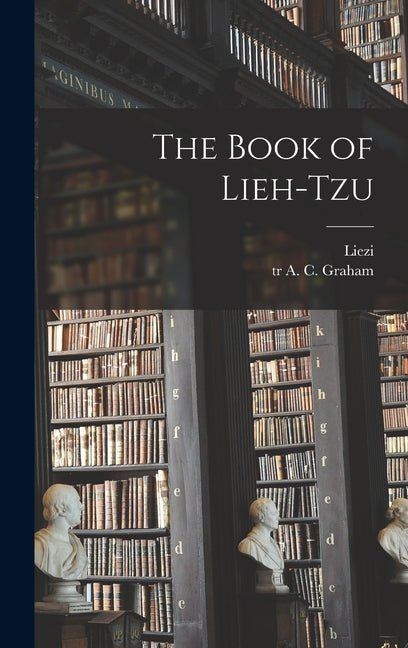
4th Cent B. C. Liezi
The Book of Lieh-tzu
The Book of Lieh-tzu
Couldn't load pickup availability
What is the nature of spontaneity, and how do we live in harmony with the natural flow of existence? The Book of Lieh Tzu (also known as the Liezi) is the third foundational text of Daoism, completing the classical Taoist trinity alongside the Dao De Jing and the Zhuangzi. Attributed to the sage Lieh Tzu (Lie Yukou), who lived around the 4th century BCE, the work is a collection of parables, anecdotes, and philosophical reflections that explore the Dao through stories of extraordinary skill, magical transformations, and the cultivation of naturalness. Like the Zhuangzi, the Liezi uses humor, paradox, and vivid narrative to convey truths that cannot be captured in systematic philosophy, teaching that wisdom comes through yielding to the Way rather than imposing our will upon the world.
The text is organized into eight chapters covering themes central to Daoist thought: the relativity of perception and judgment, the cultivation of inner stillness, the nature of fate and destiny, the relationship between life and death, the power of non-action (wu-wei), and the attainment of spiritual freedom through letting go of attachments. The Liezi is filled with memorable tales—the swimmer who moves effortlessly through dangerous rapids by yielding to the water's flow, the archer whose perfect skill comes from forgetting technique, the man who learns to ride the wind through complete surrender to natural forces. These stories illustrate the Daoist principle that mastery comes not through effort and control but through alignment with the Dao, through becoming so natural and spontaneous that action arises without intention or strain.
For contemplative readers, The Book of Lieh Tzu offers profound meditation on spontaneity, skill, and the art of living without forcing. The work asks: What does it mean to act without intention yet accomplish everything? How do we cultivate the naturalness that allows us to respond perfectly to each situation? What is the relationship between fate and freedom, between accepting what is and shaping our lives? How do we develop the inner stillness that allows spontaneous action to arise? What does it mean to yield to the flow of life rather than resist it? How do we let go of the self-consciousness that blocks natural skill and grace? The Liezi becomes essential reading for understanding the full range of classical Daoist thought—offering not abstract principles but concrete stories that show what it means to live in harmony with the Way.
What You'll Discover
- The third foundational text of Daoism alongside the Dao De Jing and Zhuangzi
- Parables and anecdotes on spontaneity, skill, and natural living
- Teachings on wu-wei (non-action), yielding, and alignment with the Dao
- Stories of extraordinary skill achieved through naturalness and letting go
- Daoist philosophy on fate, destiny, life, death, and spiritual freedom
- The cultivation of inner stillness and spontaneous action
- Scholarly edition preserving this important classical text
- Essential companion to the Dao De Jing and Zhuangzi
Lieh Tzu (Lie Yukou, c. 4th century BCE) was a Daoist sage whose teachings were preserved in this collection of parables and philosophical reflections. While the text as we have it was likely compiled and edited over several centuries, it preserves authentic Daoist wisdom from the classical period and has been treasured alongside the Dao De Jing and Zhuangzi as one of the three pillars of Daoist literature. This scholarly edition has been carefully preserved and republished to ensure this culturally important work remains accessible to contemporary readers, maintaining the original text's integrity while presenting it in a clear, readable format.
Perfect for: Students of Daoism and Chinese philosophy, readers who loved the Dao De Jing and Zhuangzi, contemplative practitioners exploring spontaneity and wu-wei, those interested in the cultivation of natural skill and effortless action, scholars of Eastern wisdom traditions, anyone drawn to philosophical parables and Daoist teachings on yielding and flow, readers seeking to complete their understanding of classical Daoist thought.
Hardcover edition. Lieh Tzu's classic Daoist text—offering contemplative wisdom on spontaneity, naturalness, and living in harmony with the Way through unforgettable parables and profound philosophical insight.
Share