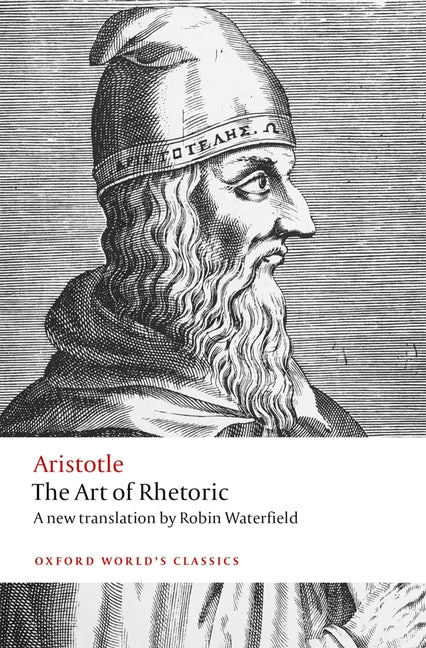
Aristotle
The Art of Rhetoric
The Art of Rhetoric
Couldn't load pickup availability
What is the art of persuasion? Aristotle's The Art of Rhetoric (4th century BCE) is the foundational text on persuasive communication—a systematic exploration of how language moves audiences to belief and action. Written in the context of ancient Greek democracy, where citizens gathered to deliberate laws, policies, and legal cases through public speech, Aristotle's treatise examines the principles that make speech effective. Far from a manual of manipulation, the Rhetoric is a philosophical investigation into how reason, emotion, and character combine to create conviction. Aristotle treats rhetoric as an art (technē)—a disciplined practice grounded in understanding human psychology, ethics, and logic—and demonstrates how speakers can construct persuasive arguments on any subject of communal concern.
Aristotle organizes his treatise into three books covering the means of persuasion, the types of rhetoric, and the style and arrangement of speech. He identifies three modes of persuasion: logos (logical argument), pathos (emotional appeal), and ethos (the speaker's credibility and character). He examines deliberative rhetoric (political speech about future action), forensic rhetoric (legal speech about past events), and epideictic rhetoric (ceremonial speech praising or blaming). Throughout, Aristotle shows how effective persuasion requires understanding your audience—their values, emotions, and ways of reasoning—and adapting your speech accordingly. He explores how to construct sound arguments, evoke appropriate emotions (anger, pity, fear, confidence), and demonstrate trustworthiness. The work's genius lies in Aristotle's recognition that persuasion is not merely technical skill but requires wisdom about human nature, ethics, and the good.
For contemplative readers, The Art of Rhetoric offers profound meditation on communication, truth, and ethical influence. The work asks: What makes speech persuasive? How do reason and emotion work together in human judgment? What is the relationship between persuasion and truth? How should we use language to influence others ethically? What does it mean to speak with credibility and character? How do we discern sound arguments from fallacious ones? Aristotle's Rhetoric becomes essential wisdom for anyone who seeks to communicate with clarity and integrity—not to manipulate but to help truth find its most persuasive expression, to understand how we are moved by words, and to cultivate the ethical use of language in service of the common good.
What You'll Discover
Aristotle's systematic treatment of persuasive communication (4th century BCE)
Three modes of persuasion: logos (logic), pathos (emotion), ethos (character)
Types of rhetoric: deliberative, forensic, epideictic
How to construct sound arguments and evoke appropriate emotions
The relationship between rhetoric, ethics, psychology, and logic
Contemplative insights into communication, truth, and ethical influence
The foundational text that shaped Western understanding of persuasion
Aristotle (384-322 BCE) was one of the most influential philosophers in Western history, student of Plato and tutor to Alexander the Great. His systematic investigations spanned logic, ethics, politics, metaphysics, biology, and rhetoric. The Rhetoric demonstrates Aristotle's characteristic method: careful observation of human practice, systematic classification, and philosophical analysis that reveals underlying principles. His work has profoundly influenced how we understand persuasion, argument, and the ethical use of language.
Perfect for: Readers of classical philosophy and ancient Greek thought, students of communication and persuasive writing, contemplative readers exploring language and ethical influence, those interested in the foundations of Western rhetoric, anyone seeking to understand how reason and emotion shape judgment, readers who want to discern sound arguments and speak with integrity, students of Aristotle and classical political thought.
Paperback edition. Aristotle's foundational treatise on persuasive communication—offering contemplative wisdom on logos, pathos, and ethos, the ethical use of language, and how to help truth find its most persuasive expression.
Share