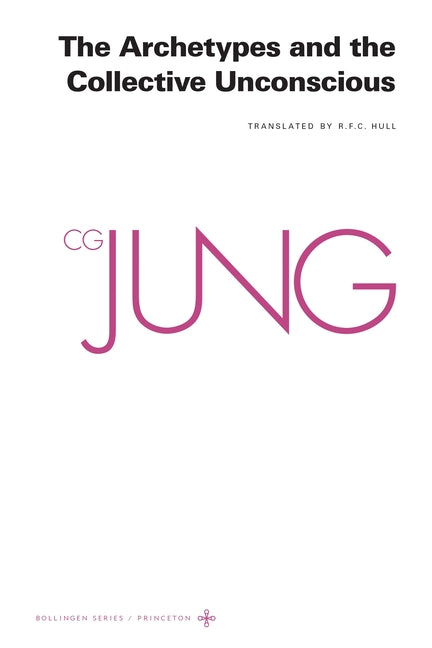
C. G. Jung
The Archetypes and the Collective Unconscious
The Archetypes and the Collective Unconscious
Couldn't load pickup availability
What does it mean to encounter the universal patterns that shape human experience across cultures and centuries—the archetypes that emerge from the collective unconscious and appear in myths, dreams, fairytales, and the depths of the psyche? C.G. Jung's The Archetypes and the Collective Unconscious is the essential collection of essays on two of Jung's most revolutionary concepts, offering profound insights into the Mother archetype, the Child archetype, the Trickster, the anima and animus, rebirth, individuation, and mandala symbolism. This is not introductory psychology but foundational depth psychology, by the Swiss psychiatrist who discovered that beneath our personal unconscious lies a deeper layer of universal, inherited patterns shared by all humanity.
This volume brings together twelve of Jung's most important essays written between 1933 and 1954, exploring the archetypes that structure human experience and the collective unconscious from which they emerge. Jung examines the Mother archetype, the Child archetype and its role in transformation, the Trickster figure, the anima (inner feminine) and animus (inner masculine), the process of individuation, rebirth symbolism, and the significance of mandalas as symbols of the Self. Drawing on mythology, fairytales, alchemy, and clinical practice, Jung shows how these universal patterns operate in dreams, symptoms, and the journey toward wholeness.
For readers seeking contemplative wisdom and psychological depth, The Archetypes and the Collective Unconscious serves as both theoretical foundation and practical guide to understanding the deeper structures of the psyche. This is a book for serious students of Jungian psychology, for therapists working with archetypal material, for scholars of mythology and comparative religion, for anyone exploring dreams and the unconscious. It's a reminder that we are participants in a collective human story, that the archetypes connect us to something larger than ourselves, and that understanding these universal patterns is essential for the journey toward wholeness.
Explore more Jungian wisdom: Deepen your understanding with Memories, Dreams, Reflections for Jung's autobiography, The Undiscovered Self for accessible Jung, or Owning Your Own Shadow by Robert A. Johnson for practical shadow work.
What You'll Discover
- Jung's foundational essays on archetypes and the collective unconscious (1933–1954)
- The Mother, Child, and Trickster archetypes and their psychological significance
- The anima and animus—inner feminine and masculine principles
- Rebirth symbolism, individuation process, and mandala symbolism
- How universal patterns appear in myths, dreams, fairytales, and the psyche
C.G. Jung (1875–1961) was a Swiss psychiatrist and psychoanalyst who founded analytical psychology. After collaborating with Sigmund Freud, Jung developed his own approach emphasizing the collective unconscious, archetypes, individuation, and the integration of opposites. His work bridges psychology, mythology, religion, alchemy, and philosophy, profoundly influencing depth psychology, psychotherapy, and the arts.
Perfect for: Serious students of Jungian and analytical psychology, therapists and analysts working with archetypal material, scholars of mythology and comparative religion, readers exploring dreams and the unconscious, students of depth psychology, those on the individuation journey, practitioners interested in mandala symbolism, readers drawn to alchemy and symbolic thought, students of the Mother, Child, and Trickster archetypes, anyone exploring anima/animus and inner opposites, readers who loved Jung's other works, those ready to explore the collective unconscious and universal patterns of human experience.
Princeton University Press paperback edition. C.G. Jung's essential collection of essays on archetypes and the collective unconscious—offering foundational insights into the Mother, Child, and Trickster archetypes, anima/animus, rebirth, individuation, and mandala symbolism that shape human experience across cultures and time.
Share