Virgil
The Aeneid
The Aeneid
Couldn't load pickup availability
What does it cost to build an empire? Virgil's Aeneid—Rome's founding epic—follows the Trojan hero Aeneas as he flees the burning ruins of Troy, endures divine interference and mortal suffering, and ultimately fulfills his destiny to establish the civilization that will become Rome. This is not a simple hero's journey but a profound meditation on duty, loss, empire, and the human cost of historical greatness.
Composed during the reign of Augustus Caesar at the outset of the Roman Empire, the Aeneid celebrates Rome's origins while unflinchingly dramatizing the violence, displacement, and sacrifice required to create it. Through Aeneas's struggles—his doomed love for Dido, his descent into the underworld, his brutal war in Italy—Virgil explores the tension between personal desire and collective destiny, between compassion and conquest. This is epic poetry as moral inquiry: what do we owe to fate, to family, to the future? What is lost when empires rise?
For contemplative readers, the Aeneid offers profound reflection on duty, surrender, and the spiritual cost of living according to destiny rather than desire. Aeneas embodies pietas—devotion to duty, family, and the gods—but Virgil reveals the psychological toll of such devotion: the grief of leaving Dido, the weight of carrying the dead, the moral ambiguity of violence in service of a greater good. The epic asks questions central to the contemplative life: How do we discern between ego and calling? What do we sacrifice when we surrender personal will to a larger purpose? How do we hold compassion while fulfilling difficult duties? The Aeneid becomes a meditation on the inner struggle between what we want and what we're called to do, and the wisdom required to navigate that tension with integrity.
What You'll Discover
- The founding myth of Rome and the journey from Troy's ashes to Italy's shores
- Virgil's complex portrait of duty (pietas) and its psychological and spiritual toll
- The tragic romance of Aeneas and Dido, Queen of Carthage
- Aeneas's descent into the underworld and visions of Rome's future glory
- The brutal final war in Italy and the moral ambiguity of empire-building
- Contemplative insights into surrender, calling, and the tension between desire and duty
- Divine intervention, fate, and the limits of human agency in shaping history
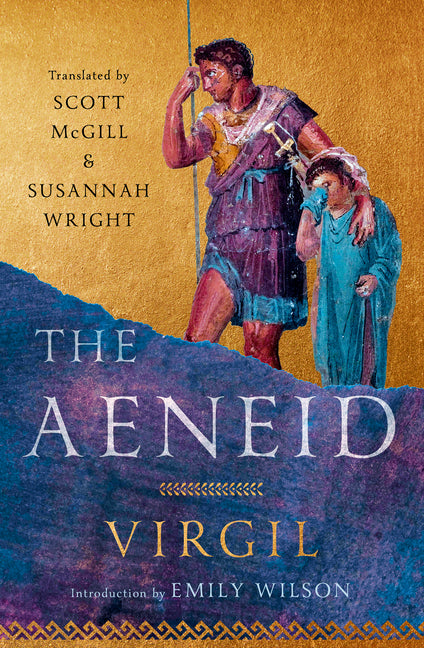
Unlike Homer's epics, which emerged from oral tradition, the Aeneid was crafted by a singular poetic genius working at the height of Roman literary culture. Virgil's dactylic hexameter—rendered here in unrhymed iambic pentameter by Scott McGill and Susannah Wright—achieves an ideal balance between contemporary accessibility and epic dignity. This first collaborative English translation captures Virgil's sensitivity to empire's human costs while preserving the poem's propulsive rhythm and emotional power.
This edition includes Emily Wilson's rich introduction, maps, pronunciation glossary, genealogies, extensive notes, and book summaries—making Rome's founding poem accessible to contemporary readers while honoring its complexity and depth.
Perfect for: Readers of classical literature and epic poetry, contemplative readers exploring themes of duty, surrender, and calling, students of Roman history and culture, those interested in the moral dimensions of empire and power, readers exploring foundational Western texts, anyone drawn to stories that examine the tension between personal desire and larger purpose.
Hardcover edition. Virgil's masterwork on Rome's founding—a tale of adventure, loss, and the human price of empire, offering contemplative wisdom on duty, surrender, and the spiritual cost of living according to destiny rather than desire.
Share