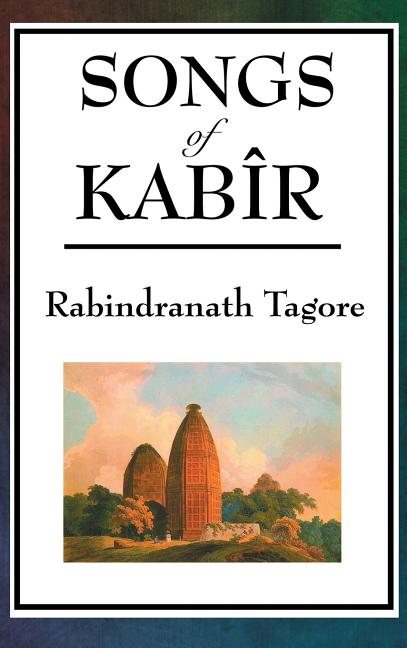
Rabindranath Tagore
Songs of Kabir
Songs of Kabir
Couldn't load pickup availability
Kabir's Songs—the mystical poetry of the 15th-century Indian weaver-saint who transcended Hindu and Muslim boundaries, presenting devotional verses of profound simplicity and spiritual depth that celebrate the formless Divine, critique religious hypocrisy, and express the soul's longing for union with the Beloved, in Rabindranath Tagore's luminous translation.
Kabir (1440-1518), a low-caste weaver from Varanasi, became one of India's most beloved mystic poets. Raised in a Muslim family but influenced by Hindu bhakti devotion, Kabir refused sectarian labels, declaring "I am neither Hindu nor Muslim." His songs (dohas and padas) use simple, earthy language to express profound spiritual truths: the Divine dwells within, not in temples or mosques; rituals and scriptures mean nothing without inner transformation; the soul's true home is union with the formless Beloved. His poetry profoundly influenced both Hindu bhakti and Sufi traditions, and his followers formed the Kabir Panth (Path of Kabir), which continues today.
What you'll discover:
- The formless Divine (nirguna brahman) beyond all names and forms
- Critique of religious hypocrisy, empty rituals, and sectarian divisions
- The soul's longing for union with the Beloved
- Simple, direct language expressing profound mystical truths
- The Divine dwelling within—"The Guest is inside you, and also inside me"
- Weaving metaphors—the soul as thread, God as weaver
- Rabindranath Tagore's poetic English translation
- Cross-tradition wisdom bridging Hindu and Muslim mysticism
Kabir's poetry is revolutionary in its simplicity and inclusivity. He rejects caste distinctions, religious labels, and elaborate theology in favor of direct experience: "I laugh when I hear that the fish in the water is thirsty." His songs use everyday images—weaving, the marketplace, husband and wife—to express mystical union. He challenges both Hindus and Muslims: pilgrimage, fasting, and scripture-reading are worthless if the heart remains closed. What matters is inner transformation, recognizing the Divine presence within all beings, and living with love and humility.
What makes Kabir's Songs essential is their timeless relevance and cross-tradition appeal. Kabir speaks to seekers of all backgrounds, offering wisdom that transcends religious boundaries. His poetry influenced Guru Nanak (founder of Sikhism), Sufi saints, and the bhakti movement. Rabindranath Tagore's translation, published in 1915, introduced Kabir to the English-speaking world with lyrical beauty that preserves the original's devotional intensity and mystical depth.
Perfect for: Students of Hindu bhakti and Sufi mysticism, readers interested in devotional poetry and mystical verse, those drawn to interfaith and cross-tradition spirituality, students of Indian religious history and the bhakti movement, readers seeking simple yet profound spiritual wisdom, anyone interested in poetry that transcends sectarian boundaries, and contemplative readers drawn to the soul's longing for union with the Divine.
This hardcover edition presents Kabir's mystical songs in Rabindranath Tagore's luminous translation—the devotional poetry of the weaver-saint who transcended religious boundaries and sang of the formless Divine dwelling within all beings.
Share