BooksCloud
Similarities and Differences Between Theravada and Mahayana Buddhism (With Insights on Bodhisattva, Emptiness, and More)
Similarities and Differences Between Theravada and Mahayana Buddhism (With Insights on Bodhisattva, Emptiness, and More)
Couldn't load pickup availability
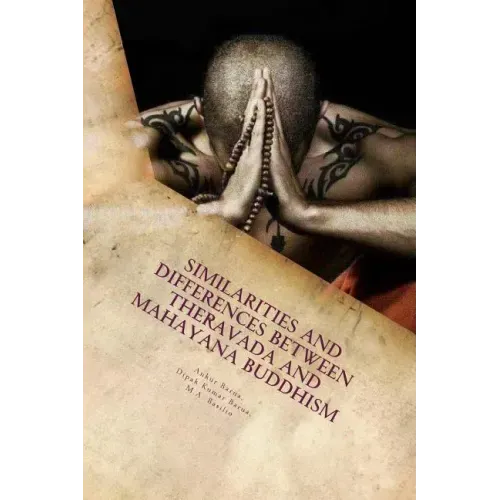
What does it mean to understand the two great streams of Buddhism—to recognize both the shared essence and the distinct paths of Theravada and Mahayana traditions? Similarities and Differences Between Theravada and Mahayana Buddhism is a concise exploration of these two major Buddhist schools, illuminating how they converge on core truths of suffering, impermanence, and liberation while diverging in profound ways regarding the bodhisattva ideal, the nature of the Buddha, meditation practices, and the concept of emptiness (sunyata). This is not an academic treatise but an accessible guide for understanding Buddhist diversity, by scholars who bring interdisciplinary depth to this harmonious dialogue between the Way of the Elders and the Great Vehicle.
Rooted in the fundamental teachings preserved since the Third Council under Emperor Asoka, both Theravada and Mahayana Buddhism share the Buddha's core insights into the Four Noble Truths, the Noble Eightfold Path, and the goal of liberation from suffering. Yet they differ significantly: Theravada emphasizes individual liberation through the arhat ideal and preserves the earliest teachings in the Pali Canon, while Mahayana emphasizes the bodhisattva path of universal compassion, the concept of emptiness (sunyata), and the vision of Buddha-nature inherent in all beings. This work explores these variations with clarity and respect, fostering appreciation for how both traditions enrich the spiritual journey.
For readers seeking contemplative wisdom and understanding of Buddhist traditions, this book serves as both comparative study and bridge between schools. This is a book for students of Buddhism seeking to understand different traditions, for practitioners exploring Theravada and Mahayana paths, for readers interested in comparative religion and Buddhist philosophy, for those drawn to the bodhisattva ideal and emptiness teachings. It's a reminder that Buddhist diversity reflects the Buddha's skillful means in teaching different paths for different temperaments, that similarities bind us in shared truth while differences open new doors to understanding, and that both the simplicity of Theravada and the expansive compassion of Mahayana point toward the same liberation.
What You'll Discover
- Shared foundations: Four Noble Truths, Eightfold Path, and core Buddhist teachings
- Key differences: arhat vs. bodhisattva ideals, Pali Canon vs. Mahayana sutras
- Theravada emphasis on individual liberation and earliest teachings
- Mahayana emphasis on universal compassion, emptiness (sunyata), and Buddha-nature
- Comparative insights for understanding Buddhist diversity and unity
Authored by Dr. Dipak Kumar Barua, a pioneer in applied Buddhism and former director of Nava Nalanda Mahavihara; Dr. Ankur Barua, a scholar in Buddhist studies and community medicine; and M.A. Basilio, a psychologist with a passion for religion and science. Together they bring interdisciplinary depth to this exploration, combining scholarly precision with accessible writing that makes complex philosophical differences clear for modern readers seeking to understand the rich diversity within Buddhism.
Perfect for: Students of Buddhism seeking to understand different traditions, practitioners exploring both Theravada and Mahayana paths, readers interested in comparative religion and Buddhist philosophy, those drawn to the bodhisattva ideal and emptiness teachings, anyone seeking to understand Buddhist diversity and unity, students of the Pali Canon and Mahayana sutras, readers exploring arhat and bodhisattva ideals, those interested in how Buddhism adapted across cultures, practitioners seeking to appreciate both schools, anyone ready to discover unity amid diversity in Buddhist teachings.
Paperback edition | 36 pages. Concise comparative study of Theravada and Mahayana Buddhism—exploring shared teachings and key differences including the bodhisattva ideal, emptiness, and paths to liberation.
Share