Benjamin Jowett
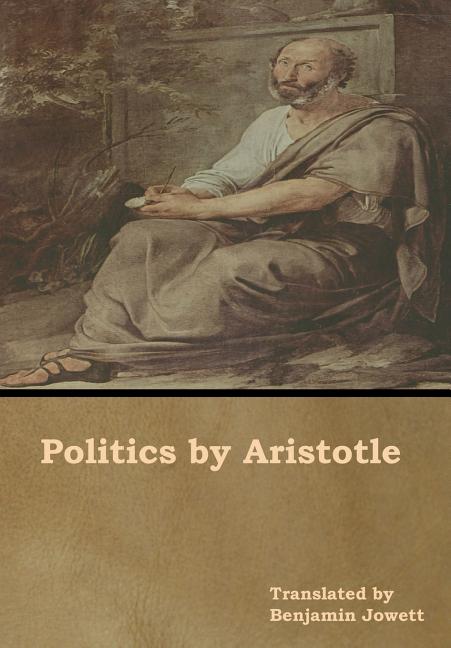
Politics by Aristotle
Politics by Aristotle
Couldn't load pickup availability
Aristotle's Politics stands as one of the foundational texts of Western political philosophy and remains essential reading for anyone seeking to understand the nature of governance, citizenship, and the good life within political community.
Written in the 4th century BCE and grounded in the empirical study of 158 different city-states, Aristotle approaches political philosophy not as abstract theory but as practical wisdom drawn from observation of real constitutions and their outcomes. He examines the relationship between individual flourishing and collective organization, arguing that humans are inherently political beings who achieve their highest potential through participation in the life of the polis.
What distinguishes this work is Aristotle's integration of ethics and politics. For Aristotle, political life is not merely about power or administration—it is the arena in which virtue is cultivated and human excellence realized. He analyzes the varieties of constitutional government (democracy, oligarchy, aristocracy, monarchy, tyranny), their strengths and pathologies, and the conditions necessary for stable, just societies that serve the common good.
Key Themes:
- The nature of citizenship and political participation
- Constitutional forms and their comparative merits
- The relationship between justice, law, and the common good
- The role of education in shaping virtuous citizens
- Economic organization and its impact on political stability
- The distinction between rule for the common good and rule for private interest
- The mixed constitution as a path to political stability
Why This Text Matters:
Aristotle's Politics has shaped political thought for over two millennia, influencing thinkers from Aquinas to Arendt. Unlike utopian visions of the ideal state, Aristotle offers a pragmatic, empirically grounded framework for understanding how political communities function and how they might be improved. His insights on democracy, the dangers of extreme inequality, the importance of a strong middle class, and the relationship between constitutional design and civic virtue remain strikingly relevant to contemporary political debates.
Ideal for: Students of political philosophy, scholars of classical thought, political theorists, anyone engaged in civic life, and readers seeking to understand the foundational questions of justice, governance, and human flourishing within community.
Hardcover edition. A cornerstone text for any serious philosophical or political library.
Share