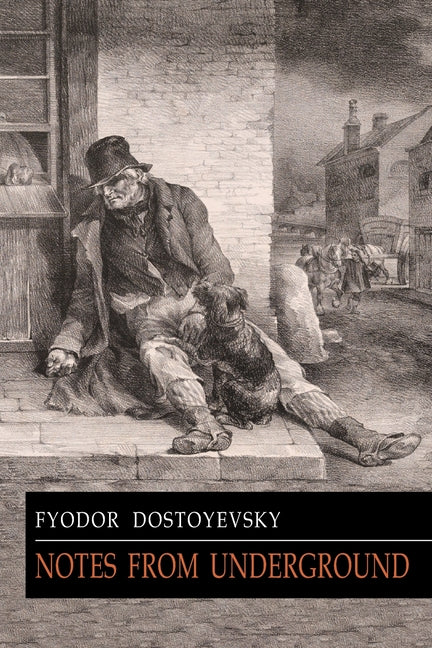
Fyodor Dostoyevsky
Notes from Underground
Notes from Underground
Couldn't load pickup availability
Fyodor Dostoevsky's groundbreaking philosophical novella—a bitter, brilliant monologue by an alienated narrator who rejects society, reason, and progress, creating one of literature's first existentialist works and a profound exploration of consciousness, free will, and the irrational depths of the human soul.
Fyodor Dostoevsky (1821-1881) published Notes from Underground in 1864, creating what many consider the first existentialist novel and a foundational text of modern literature. The unnamed narrator—the "Underground Man"—is a retired civil servant living in isolation, consumed by spite, self-consciousness, and philosophical rebellion. In Part One, he delivers a caustic philosophical monologue attacking rationalism, utilitarianism, and the idea of human progress. In Part Two, he recounts humiliating episodes from his past that reveal the psychological roots of his alienation.
What you'll discover:
- A scathing critique of rationalism and the belief that humans act in their rational self-interest
- The Underground Man's assertion that humans desire freedom more than happiness or reason
- Exploration of consciousness as suffering—"too much consciousness is a disease"
- The paradox of free will: we choose irrationally just to prove we're free
- Psychological insight into spite, resentment, and self-destructive behavior
- Critique of utopian socialism and the "Crystal Palace" of perfect society
- The divided self—consciousness turned against itself
- A voice that is simultaneously repulsive and profoundly human
The Underground Man argues that human beings are not rational calculators of self-interest but irrational, contradictory creatures who will act against their own benefit just to assert their freedom. He rejects the utopian vision of a perfectly rational society (symbolized by the Crystal Palace) because it would reduce humans to "piano keys" or "organ stops"—predictable, determined, unfree. He insists that consciousness itself is a disease, that too much awareness leads to paralysis and suffering, yet he cannot escape his own hyper-consciousness.
What makes this novella essential for your contemplative library is its unflinching exploration of consciousness and freedom. Dostoevsky doesn't offer solutions or comfort—he presents a voice that challenges every optimistic assumption about human nature, reason, and progress. The Underground Man is both pathetic and profound, his spite and self-loathing revealing truths about the human condition that more balanced perspectives miss. He embodies the existentialist insight that consciousness brings suffering, that freedom is a burden, and that we are radically responsible for our choices.
The novella's influence on modern literature and philosophy is immeasurable. It pioneered the anti-hero, influenced existentialism (Nietzsche, Sartre, Camus), shaped modernist literature (Kafka, Beckett), and continues to speak to anyone who feels alienated from society or trapped in self-consciousness. It's a short work—barely over 100 pages—yet it contains ideas that have occupied philosophers and writers for over 150 years.
Perfect for: Readers of philosophical and existential literature, students of Dostoevsky and Russian literature, those interested in the origins of existentialism, readers exploring consciousness and the nature of the self, students of psychology and the divided self, anyone questioning rationalism and utopian thinking, readers of Nietzsche, Kafka, and existential literature, and contemplative readers willing to engage with a difficult, brilliant, and profoundly unsettling voice.
This paperback edition presents Dostoevsky's groundbreaking novella—a bitter, brilliant exploration of consciousness, freedom, and the irrational depths of the human soul that continues to challenge and disturb readers.
Share