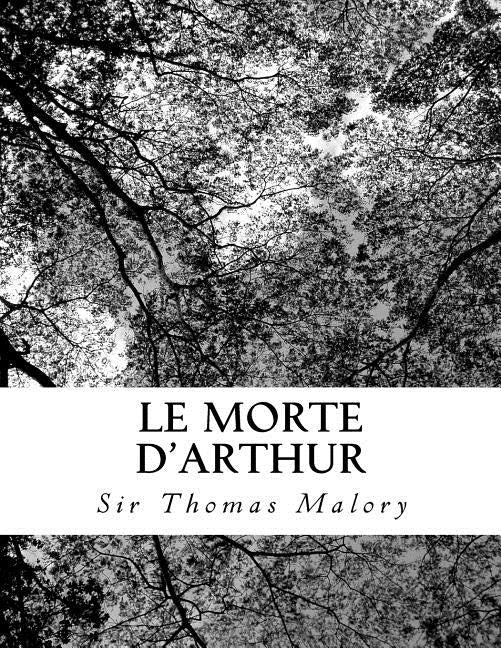
Thomas Malory
Le Morte d'Arthur
Le Morte d'Arthur
Couldn't load pickup availability
What happens when the dream dies? Thomas Malory's Le Morte d'Arthur (completed 1470, published 1485) is the definitive English compilation of Arthurian legend—the rise and tragic fall of King Arthur, the quest for the Holy Grail, the love triangle of Arthur, Guinevere, and Lancelot, and the destruction of Camelot. Written while Malory was imprisoned, this work gathers centuries of Arthurian romance into a single, sweeping narrative of idealism, betrayal, and the inevitable collapse of even the noblest endeavors. This is not escapist fantasy but profound meditation on loyalty, honor, love, and the tragic gap between the world we dream of and the world we create.
Malory's Arthur establishes the Round Table as an ideal of chivalric brotherhood—knights bound by honor, justice, and fellowship. But from the beginning, the seeds of destruction are present: Arthur's incestuous conception, Mordred's illegitimate birth, Lancelot and Guinevere's forbidden love. The quest for the Holy Grail reveals the spiritual inadequacy of even the greatest knights—only Galahad achieves the vision, and his purity is so complete he cannot remain in the world. When Lancelot and Guinevere's affair is exposed, the fellowship fractures, civil war erupts, and Arthur dies at the hands of his own son. Camelot falls not because of external enemies but because of internal contradictions: the impossibility of sustaining perfection, the conflict between love and duty, the way even noble ideals contain the seeds of their own destruction.
For contemplative readers, Le Morte d'Arthur offers profound meditation on impermanence, idealism, and the tragedy of human limitation. The work asks: What do we do when our highest ideals prove unsustainable? How do we hold loyalty to conflicting loves and duties? What does it mean that even the noblest fellowship contains the seeds of its own destruction? How do we live with the knowledge that everything we build will eventually fall? Le Morte d'Arthur becomes a mirror for examining our own relationship to idealism, loss, and the ways we respond when dreams collapse. Malory's genius lies in showing that the contemplative life requires holding both the beauty of the ideal and the inevitability of its failure—honoring what was noble in Camelot while accepting that impermanence is the nature of all things.
What You'll Discover
- The definitive English compilation of Arthurian legend (completed 1470, published 1485)
- Arthur's rise: the sword in the stone, the Round Table, the fellowship of knights
- The quest for the Holy Grail and the spiritual testing of Arthur's knights
- The tragic love triangle of Arthur, Guinevere, and Lancelot
- The fall of Camelot: betrayal, civil war, and Arthur's death at Mordred's hand
- Contemplative insights into idealism, impermanence, and the tragedy of human limitation
- The foundation of English Arthurian tradition and chivalric romance
Thomas Malory (c. 1415-1471) wrote Le Morte d'Arthur while imprisoned, drawing on French and English sources to create the most complete and influential version of the Arthurian legend in English. His work shaped how generations have understood Arthur, Lancelot, Guinevere, and the dream of Camelot. The title itself—"The Death of Arthur"—signals that this is a story of endings, of the inevitable fall of even the greatest kingdoms.
This edition preserves Malory's masterwork, offering readers access to one of the foundational texts of English literature and a timeless exploration of nobility, tragedy, and the impermanence of all human endeavors.
Perfect for: Readers of medieval literature and Arthurian legend, contemplative readers exploring idealism and impermanence, students of Thomas Malory and chivalric romance, those interested in the tragedy of noble ideals and human limitation, anyone drawn to stories that examine loyalty, love, and the fall of kingdoms, readers seeking wisdom on holding beauty and loss together.
Paperback edition. Malory's definitive Arthurian epic—the rise and tragic fall of Camelot, offering contemplative wisdom on idealism, impermanence, and living with the knowledge that even our noblest dreams contain the seeds of their own destruction.
Share