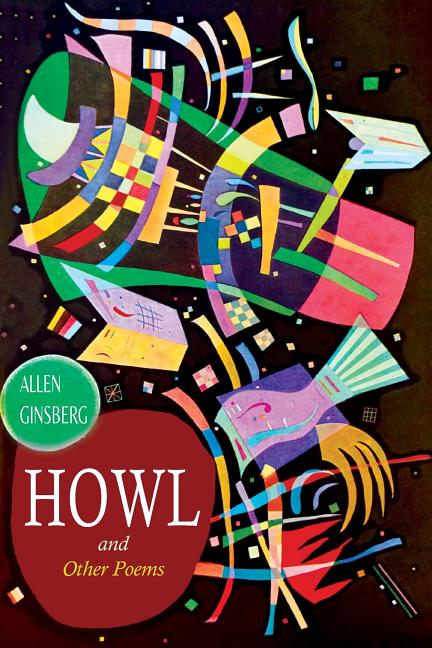
Allen Ginsberg
Howl, and Other Poems
Howl, and Other Poems
Couldn't load pickup availability
What does it mean to bear witness to a generation's madness, to transform rage and ecstasy into a howl that shatters every convention? Allen Ginsberg's Howl, and Other Poems is one of the most explosive and influential works of 20th-century American poetry—a raw, visionary cry against conformity, repression, and the soul-crushing machinery of modern life. First published in 1956 by Lawrence Ferlinghetti's City Lights Books, this slim volume ignited a cultural revolution and became the defining text of the Beat Generation. The title poem, "Howl," written in 1955, is a prophetic lament for "the best minds of my generation destroyed by madness," a three-part incantation that fuses biblical cadence with jazz rhythms, surrealist imagery with street-level truth. So powerful and uncompromising was Ginsberg's vision that the book's publication led to an obscenity trial—which Ginsberg and Ferlinghetti won in 1957, striking a blow for literary freedom that reverberates to this day.
At first encounter, "Howl" may seem like chaos—its long, breathless lines cascading with images of junkies, mystics, angels, and outcasts wandering the streets of America. But Ginsberg is not writing chaos; he is writing prophecy, bearing witness to the spiritual crisis of post-war America with unflinching honesty and ecstatic compassion. The poem asks: What happens to those who refuse to conform, who seek transcendence in a culture of materialism and war? How do we name the forces—Moloch, the devouring god of industry and violence—that consume human souls? And how can poetry itself become an act of resistance, a howl of affirmation in the face of annihilation? Ginsberg offers no comfort, but he offers something greater: the courage to see clearly, to feel deeply, and to speak the unspeakable truth.
For readers seeking contemplative wisdom in unexpected places, Howl, and Other Poems is a profound meditation on freedom, consciousness, and the sacred in the profane. This collection includes not only "Howl" and its ecstatic "Footnote to Howl" ("Holy! Holy! Holy!"), but also essential Beat classics like "A Supermarket in California" (Ginsberg's tender homage to Walt Whitman), "Sunflower Sutra" (a vision of beauty amid industrial decay), and "America" (a fierce, funny confrontation with the nation's soul). This is poetry that refuses to be tamed, that insists on the holiness of the body and the mind, that transforms suffering into song. It's a reminder that the greatest poetry does not comfort but awakens, and that the path to liberation begins with the courage to howl.
What You'll Discover
- Allen Ginsberg's revolutionary masterpiece and defining work of the Beat Generation
- "Howl"—the three-part prophetic poem that changed American poetry forever
- "Footnote to Howl"—ecstatic affirmation of the sacred in all things
- Essential Beat classics: "A Supermarket in California," "Sunflower Sutra," "America"
- Earlier poems including "Song," "Wild Orphan," and "In Back of the Real"
- The book that sparked the landmark 1957 obscenity trial and won
- Raw, visionary poetry fusing biblical cadence, jazz rhythms, and surrealist imagery
Allen Ginsberg (1926-1997) was an American poet, philosopher, and leading figure of the Beat Generation and counterculture movements. Born in Newark, New Jersey, Ginsberg studied at Columbia University, where he met Jack Kerouac, William S. Burroughs, and other writers who would shape his vision. Howl, and Other Poems, published when Ginsberg was just 29, established him as one of the most important voices in American literature. Throughout his life, Ginsberg remained a tireless advocate for personal and political freedom, exploring Buddhism, meditation, and consciousness expansion while speaking out against war, censorship, and injustice. His work bridges the prophetic tradition of Walt Whitman and William Blake with the raw immediacy of street poetry, creating a uniquely American voice that continues to inspire poets, seekers, and rebels worldwide.
Perfect for: Readers seeking visionary and prophetic poetry, students of Beat literature and counterculture history, those drawn to poetry that challenges convention and speaks truth to power, anyone interested in the intersection of poetry and spiritual rebellion, admirers of Walt Whitman and William Blake, seekers exploring consciousness and liberation through literature, students of American poetry and the 1950s cultural revolution, those interested in literary censorship and freedom of expression, readers who love raw, uncompromising voices that transform suffering into sacred witness.
City Lights Books paperback edition. Ginsberg's revolutionary masterpiece—offering a prophetic howl against conformity and a vision of the sacred in the profane, the book that defined a generation and changed American poetry forever.
Share